HepBFree SF LogoSF Bridge
Showing posts with label People: Janet Zola. Show all posts

Friday, May 27, 2011

Asian Heritage Street Celebration Draws over 90,000

A Look at the 2011 Asian Heritage Street Celebration
by Megan Kung and Angela Pang
May 27, 2011


The SF Hep B Free team walked around the fair to raise awareness for hepatitis B. One in 10 Asian Americans is chronically infected with HBV versus one in 1,000 of the general population.

For more information about the Asian Heritage Street Celebration, and to read entire article, click here

Wednesday, March 23, 2011

HepB-Free now in Las Vegas

March 23, 2011
Balita.com


LAS VEGAS – With all the cost-cutting and spend-trimming in healthcare agencies affecting federal, state, and local levels, some cities are blessed with private individuals and community organizations taking grassroots initiative to assist the government in disseminating medical information and conducting preemptive action to prevent the occurrence to communities at-risks of a major infirmity such as Hepatitis B (or Hep B).
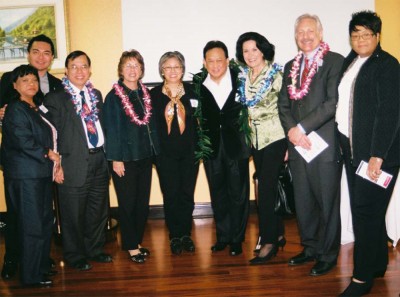

Janet Zola (4th from left), from the San Francisco Department of Public Health, and SF Hep B Free Steering Committee

One such fortunate city is Las Vegas in Nevada, home to a large group of Asians and Pacific Islanders ((collectively called APIs) in the west coast.

Filipino-American Aurora Jose-Wong, one of the prime movers behind HepBFree-Las Vegas, understands the risks Hep B poses to Asians and Pacific Islanders. Modeled largely after the pioneering work of three year-old HepB-Free in San Francisco, California, Wong conducts more research, and patterns the Las Vegas version after it. The San Francisco HepB-Free is the largest, most intensive healthcare campaign for Asian and Pacific Islanders in the U.S. and catapults the city at the forefront of the nation in fighting chronic Hepatitis B.

“The HepBFree-Las Vegas is a community initiative dedicated to reducing Hepatitis B that causes liver cancer among Asian-Americans and Pacific Islanders in Southern Nevada through a coordinated program,” shares Wong.

Launched in February, the HepBFree-Las Vegas plans to conduct a three-pronged campaign through “culturally and linguistically appropriate awareness, education, and outreach by disseminating information through API-based media, city-wide forums, and workshops; by providing low-cost or free screening and vaccinations to APIs in coordination with partnering health facilities, and at planned events on-site; and by linking those afflicted with chronic Hepatitis B to a system of health care delivery,” reveals Wong.

The Las Vegas HepB-Free Coalition includes the Asian Chamber of Commerce Foundation (ACCF), Southern Nevada Health District (SNHD), Philippine Medical Association-Nevada (PMAN), Philippine Nurses Association-Nevada (PNAN), Medical Reserve Corps (MRC), Volunteers in Medicine Southern Nevada (VMSN) and Clinical Pathology Labs.

At the official launch held at Salo-Salo Grill-Las Vegas, Wong brought together well-known entertainer Tony Ruiviar, co-founder of Society of Seven, Janet Zola, Health Promotion Specialist from the San Francisco Department of Health, and member of SF HepB-Free Steering Committee, Dr. Fernando Ona, a gastroenterologist from Hawaii, and Dr. Lawrence Sands, Chief Health Officer of SNHD.

Showman Tony Ruivivar opened the forum with the revelation of his scary bout with Hepatitis B recently. A perfect poster boy for Hep B early detection and treatment (see sidebar story), Ruivivar is now the spokesperson for HepBFree-Las Vegas.

At the healthcare forum, Ms. Zola explores and shares the strategies they used in San Francisco’s HepB-Free campaign, and fields questions from the audience.

Dr. Fernando Ona, chief of the GI Unit of the VAIHCH in Honolulu, has a lively banter with his audience in-between his lecture, as he explains in layman’s language what Hepatitis B is all about, and its importance especially to Asian Americans and Pacific Islanders. He outlines in simple terms how the disease is detected, how it can be prevented and treated.

Hep B is not a genetic or hereditary disease, and is not spread through breast-feeding, kissing, coughing, or sharing food. Hep B, explains Dr. Ona, is a virus spread through direct contact with infected blood or body fluids (such as semen or vaginal fluid).

“One of the most common ways the virus is spread is when a mother gives birth to her baby and unknowingly passes the virus to her newborn,” reveals Dr. Ona. More importantly, Dr. Ona reminds his audience, Hep B is most common in countries where screening and vaccination programs are not routinely performed particularly in Third World countries. Among the most vulnerable ethnic groups are Asians, Pacific Islanders, Africans and those from Eastern Europe. He advises everyone, who hailed from these regions, to get tested for Hep B, and vaccinated even if they feel healthy.

“Family and household members of persons afflicted with chronic Hep B need also to be screened and vaccinated in order to prevent the spread of the virus to others,” he warns.
Because chronic Hep B does not exhibit symptoms, a simple blood test detects early if a person has chronic Hep B. Simple blood tests measure the level of the virus in the body and detect if the virus is harming the liver. A person, unknowingly aware that he/she has chronic Hep B, if undetected early could suffer serious liver damage that could lead to death.

Getting tested for chronic Hep B, according to Dr. Ona, is primordial as it is the key to early detection and management of the disease and help prevent serious liver damage.
When one tested negative for Hep B, it means that person does not have Chronic Hep B, and has not been infected with the virus. Nevertheless, he/she needs the Hep B vaccine for long term protection against the virus, so that the body can successfully fight against infection in the future.

If one tested positive for Hep B, Dr. Ona advises strongly that the person must talk immediately with his/her doctor and together plan the best way to reduce the risk of serious liver damage. “Constant monitoring is a must to detect if the virus is inflicting the liver because the infection can change overtime, even if the person feels healthy. A regular liver imaging through an ultrasound helps monitor the health of the liver,” adds Dr. Ona.
The Hepatitis B vaccine is a series of three shots given over a six-month period.

Other than vaccines, Dr. Ona also advises taking anti-viral medicines to help reduce the amount of virus in the body.

Dr. Lawrence Sands explains the role and responsibility of Southern Nevada Health District in promoting the public health interest and its support to HepB-Free Las Vegas.

Wong appeals to healthcare practitioners present – physicians, nurses, healthcare providers, as well as local organizations such as the National Federation of Filipino-American Organizations (NaFFAA), Organization of Chinese Americans-LV Chapter (OCA-LV) , and various Hawaiian associations in Nevada, among others, for help in disseminating the mission and objectives of HepB-Free Las Vegas.

A visit to SF HepB-Free website reveals that API’s have the highest risk of Hepatitis B of any ethnic group. Hepatitis B is a serious disease responsible for 80% of all liver cancers among APIs, who are up to 100 times more likely to suffer from chronic Hepatitis B infection, and four times more likely to die from liver cancer compared with the general population.

The American Liver Foundation finds that one in 10 Asian Americans is chronically infected with the Hepatitis B virus, common in many countries in Southeast Asia. Most are infected at birth or by an infected family member.

A ‘silent killer,’ chronic Hep B does not exhibit any symptoms, until there is liver damage or liver cancer, and the person has no way of knowing whether he/she has Hepatitis B or not – until he/she gets tested, it’s too late to fight it, or find a cure for it.

A research conducted by J Viral Hepat in 2006, finds that an estimated two million people in the United States are living with Chronic Hepatitis B. “and most do not even know it,” adds the Institute of American Medicine of the National Academies. In 2010, Hepatitis B (HepB) is considered a leading cause of liver disease in the United States. (Story/Photos: Zen S. Laluna)

For access to the fill article, please click here

Wednesday, September 29, 2010

HEALTHLINK: Becoming Hep B Free

This article appeared as a two-page spread in HealthLink Magazine (Fall 2010 issue, pgs. 6-7), published by Brown & Toland Physicians.

Download PDF

Hepatitis B is linked to an increased risk of liver cancer among Asian-Americans and Pacific Islanders. Learn more about this disease and the campaign to fight it.

If San Francisco becomes the first city to stamp out hepatitis B — the contagious liver infection linked to liver cancer and caused by the hepatitis B virus (HBV) — then a historic coalition of more than 50 Asian Pacific Islander (API) and healthcare organizations, including Brown & Toland Physicians, can rightfully claim to have met its goal.

Dubbed the San Francisco Hep B Free Campaign, this initiative aims to screen, vaccinate and treat all San Francisco API residents for hepatitis B by providing convenient, free or low-cost blood tests at partnering health facilities and events. Already, it has spawned similar hepatitis B campaigns across the country, from Alameda County to Philadelphia.

"As an elected official, I feel it is my responsibility to educate people about hepatitis B," says state Assemblywoman Fiona Ma, who is the campaign’s honorary chair. By encouraging the community to take swift action, she adds, "hopefully, we're saving lives."

The need to increase public awareness about hepatitis B is fully appreciated by Assemblywoman Ma, who has the virus, passed from generation to generation in her family. Once Ma understood the threat she faced as an HBV carrier (including a one in four chance of developing liver cancer), she consulted her doctor and now gets tested regularly. She urged her mother to do the same. "Last December, doctors removed a cancerous part of my mother's liver, and now she's fine," says Ma. "The message is that you have to catch hepatitis B early. My family is living proof."

Chilling Statistics, Achievable Goals

Ma's family exemplifies the virus' threat to public health: An estimated one in 10 Asians are chronically infected with hepatitis B and are four times more likely to die from liver cancer compared with the general population; San Francisco has the highest rate of liver cancer in the nation, due to its high population of Asian-Americans. The campaign’s intense efforts have been likened to the coordinated assault on AIDS and HIV, with an important exception: the imminent chance for success. "We have a safe and effective vaccine, we have good oral medications to slow or prevent liver damage, and we have decent tests to determine what someone needs," says Janet Zola of the San Francisco Department of Public Health and one of Hep B Free’s cofounders and current leads. "We just have got to get people to know it."

Getting the Public's Attention

Effective use of the media to spread the message about hepatitis B has been a vital Hep B Free strategy, owing in no small part to the pivotal involvement of one of the campaign's cofounders, Ted Fang, director of the AsianWeek Foundation, and its marketing committee, chaired by John Fisher of Brown & Toland. Print and billboard ads have been especially attention getting and feature actual members of the San Francisco API community, not professional models. "The ads have been highly visible, both locally and nationally. They get people talking about hepatitis B," says Mai-Sie Chan, M.D., a Brown & Toland internist, who’s among a group of physicians featured in the latest ads and practices in the Chinatown community. "It's a good way to participate in solving a problem that is relevant not only to the Asian Pacific Islander community but to everyone."

Sunday, September 19, 2010

SF Examiner: Public health specialist works to raise hepatitis B awareness

By: Brent Begin | Examiner Staff Writer

Janet Zola, the health promotion specialist at the Department of Public Health and co-creator of "SF Hep B Free," was part of a week of events to raise awareness about hepatitis B in the Asian and Pacific Islander population (API).

What is Hep B Free? It’s a broad spectrum coalition of people in health care, the Asian-American community, businesses and nonprofits all coming together to stop the spread of hepatitis B and liver cancer.

Why the Asian-American community? In the API population there is a 10 percent infection rate. This is chronic, as it is less than 1 percent in the general population. It is one of the greatest health disparities we’ve seen.

How do you get the disease? The disease is generally passed on at birth. Over half the people infected are unaware of it. When you become affected at a very early age there are no symptoms. Only simple blood tests can tell you.

Can you get it any other way? It’s also a blood borne disease that can be transmitted sexually or through needles. Hepatitis B is about 100 times more infectious than HIV.

What’s the problem with fighting this disease? The great thing is we have all the tools to prevent and fight this disease. The problem is the lack of knowledge, lack of awareness and lack of funding support.

Friday, September 17, 2010

Hepatitis B Prevention Program Gaining Traction in San Francisco

Author: Steven Fox | Download PDF | See online version

September 17, 2010 (San Francisco, California) — A unique community-based program aimed at preventing hepatitis B in the high-risk Asian population is effectively combining provocative advertising with electronic medical records (EMRs) to maximize its success.

The program, known as San Francisco Hep B Free, is a collaborative effort of more than 50 private and public organizations that was launched 3 years ago. It sponsors numerous screening clinics, works with hospitals and primary care physicians to make screening a part of routine care, and tracks the treatment of people who are already infected with the virus.

The program works with hospitals to get pledges from physicians to routinely screen their patients for the presence of hepatitis B virus. So far, nearly half the primary care physicians in the city have signed on to the program. They have agreed to assess all at-risk patients according to Centers for Disease Control and Prevention guidelines. Three facilities — Kaiser Permanente San Francisco, the Chinese Hospital, and Northeast Medical Services — have achieved 100% physician buy-in to the program.

Challenges remain, however. "Changing practice patterns of primary care physicians is the most difficult aspect of what we do," said Ted Fang, an Asian community organizer who helped get Hep B Free started and who now works with scores of other community organizers and healthcare professionals to steer the program. "That's because of all the responsibilities doctors already have and the limited time they have to spend with each patient."

The need for attention to hepatitis B is hardly at issue, Mr. Fang noted. The disease is the prime causative factor in about 80% of liver cancers, according to World Health Organization figures, and San Francisco has the highest rate of liver cancer in the nation — about 14 cases per 100,000, compared with 9.5 cases per 100,000 in the rest of the country.

Hep B Free operates 7 stand-alone screening clinics and hosts community screening fairs that are aimed at reaching uninsured and underinsured patients.

A print and television advertising campaign that made its debut in May 2010 has helped bolster awareness of the Hep B Free program — but it has also raised a few eyebrows. Each ad features a different group of Asians — beauty queens, athletes, office workers, physicians — with the caption: "Which one deserves to die?"

Mr. Fang concedes it's a strong approach, but said the ads have produced the desired result: getting people talking about the disease, both among themselves and with their doctors. The print ads are being published in Chinese, Vietnamese, and Korean, and in English because one of the target groups is English-speaking physicians who might not be aware of the prevalence of the disease in the Asian community.

EMRs play a role in making the Hep B Free program a success. They are put to use in several phases of the program:

* For people who don't know their hepatitis B status, EMRs can be flagged to ensure that they are properly screened.

* For people being vaccinated, EMRs help track compliance to the full vaccination series (3 injections administered over 6 months).

* For people chronically infected, EMRs can generate reminders to contact patients for annual or semiannual monitoring.

"There is no way we can improve healthcare outcomes unless we can evaluate the effectiveness of current medical services," said Mr. Fang. "EMRs not only remind doctors to carry out important procedures, they also help evaluate which methods of prevention work best and which we need to improve."

Another major partner in administering the Hep B Free program is the San Francisco Department of Public Health (DPH). Janet Zola, MPH, is disease prevention and health promotion specialist there, and was a key player in developing the Hep B Free program.

That was just the start. According to Ms. Zola, "the DPH allows me to use a large percentage of my time to run the campaign, coordinate activities, and do strategic planning."

She added that she's learned several important lessons from running the program. "Resources can be leveraged without waiting for an infusion of large amounts of money," she explained. Getting cooperation from local hospitals is important, but community support has been essential to the success of the program so far, she asserted. "Volunteerism is alive and well," she added. "This is more than an Asian problem. It is an American problem."

The success of San Francisco Hep B Free hasn't gone unnoticed. Other California cities, plus Philadelphia, Pennsylvania, and Washington, DC, are working to replicate the program.

That progress is good news to Baruch Blumberg, MD, PhD, who has a special interest in hepatitis B. He received the Nobel Prize for Medicine in 1976 for his discovery of the hepatitis B virus, and later developed the first effective vaccine for the disease. The vaccine became available in the early 1980s.

Dr. Blumberg was recently honored at a dinner reception jointly sponsored by the Hep B Free program and the Chinese Hospital.

Noting that vaccines and effective treatments for hepatitis B are now potentially available worldwide, Dr. Blumberg told Medscape Medical News that the key to reducing the toll of the disease lies in continuing to increase awareness.

"These good outcomes can only be fully achieved if the public, and particularly populations with a high rate of infection, including those of Asian origin, are aware of the problem and take part in programs that include vaccination, detection, and treatment," said Dr. Blumberg.

Monday, December 14, 2009

City-wide Campaign Becomes National Hep B Model

By Fia Curley

Article on U.S. HHS Office of Minority Health website
Download PDF | OMH Homepage screenshot | OMH Article screenshot

National recognition, high-profile partnerships, in-kind donations and non-stop media buzz have the grassroots Hep B Free San Francisco Campaign looking attractive.

But if the campaign somehow lost momentum and funding dried up, organizers on the volunteer task force say they would still be working to spread the message: Hepatitis B can be eradicated.

"Nobody came into this campaign because of money," said Dr. Samuel So, director of the Asian Liver Center at Stanford University. "A lot of people don't actually do anything unless they're funded. We feel this is the right thing to do for the community and whether we get funded or not, we're going to do it."

House Speaker Nancy Pelosi, at SF hep B Free press conference.

The Jade Ribbon campaign started in San Francisco in 2001 with the goal of testing and vaccinating San Francisco residents for hepatitis B. Since then the campaign has morphed into Hep B Free SF, spread in popularity in the Bay Area and across the country and gained national recognition, highlighted by a press conference in October with House Speaker Nancy Pelosi and Deputy Assistant Secretary for Minority Health, Dr. Garth Graham. Federal representatives and government officials are now looking to replicate the program in cities with high Asian-American populations.


Hepatitis B is a virus that infects the liver and can be passed through bodily fluids via blood transfusions, sexual intercourse or tattoos or acupuncture with unclean equipment.

The virus causes yellowing of the skin, aching muscles and joints, fatigue and loss of appetite. But for people with chronic Hepatitis B, which often doesn't cause symptoms and is transmitted from mother to child, the end result can be liver cancer and death.

The campaign's intention has been to emphasize the positive messages surrounding testing through diverse outlets in order to drive more people to their own doctors for screening, vaccination and monitoring.

And now in the second phase of Hep B Free, organizers are encouraging people to visit a doctor who tests for Hep B and touting a clinician honor roll - to harness doctors' competitive nature - that will advertise a list of doctors who perform the test in major area newspapers.

Tests and subsequent vaccinations create the possibility of curbing the No. 1 health disparity in the Asian-American community.

"We really need to seize on this opportunity to address this health problem, which in the past has never received any attention," said So, a surgeon and self-proclaimed "passionate, evidenced-based advocate," who's found that some health professionals are not aware of what tests to administer for Hepatitis B.

"We have to go back to the ABC's of Hepatitis," he said. "This is a disease we can't assume they know."

The fact that not all clinicians in the Bay Area are aware of the need for Hepatitis B screening has become increasingly apparent to Dr. Lisa Tang, a primary care physician for Kaiser Permanente, who balances more than two thousand patients and has worked with the campaign for the past two years.

"It's not a standard of care with hepatitis B screenings and that's why people are not doing it," Tang said. "The risk to liver cancer is real, but is it on people's radar?"

And although Tang readily admits to moving at frenetic pace, she's determined to tackle the topic of physician awareness as she heads the clinicians outreach committee.

"Personally as an Asian American I find l do have a responsibility to do this and to make this change," Tang said. "Being a physician you change life one at a time, but for me to be able to act as a physician leader and change the behavior of my colleagues and to change how they practice — I think that implication can do so much good for the common good."

However, eradicating the virus from the entire city has taken more than a few partners in the health community.

"A lot of initiatives only work with community health centers but that's not representative of the whole community," So said. "You need everybody involved. We reached across the aisle to all the groups. So in a way it really created the opportunity for city-wide implementation and adoption."

Partnerships include the San Francisco Giants, City College of San Francisco, DAE Advertising, and Office of California Assemblywoman Fiona Ma. About 40 percent of partners are not health care organizations.

The campaign was modeled after a social movement with intentional decentralized collaboration and an approach that would be embraced by Asian cultures, according to Janet Zola, health promotions specialist of Communicable Diseases for the San Francisco Health Department.

"The thing about Hep B is we have everything we need to put this in a box," said Zola, founder of the San Francisco Immunization Coalition. "What we're lacking is public awareness by the general population of why this is important. It was clear we needed everyone involved to take true ownership of this."

With at least five major cities poised to adopt and adapt the Hep B Free campaign, original members in San Francisco are looking toward the challenge of bringing clinicians on board to enact their multifaceted approach.

"We had a much bigger picture from the beginning," said Ted Fang, director of Asian Week Foundation and fellow board member whose expertise resides in diversity issues. "We want the onus to be on the patients and the clinicians."

As billboards, bus ads and radio PSAs remind residents to ‘Be a Hero,' Fang continues to see the possibilities of the movement. From the original small dinner of ideas and listening ears in 2007 to use of the Hep B Free logo and adoption by other cities, the goal of making San Francisco the first Hepatitis B-free city is something he sees as obtainable.

"I do see it as a turning point in the history of the Asian-American community," he said, although he is quick to add, "we're not done yet - the great thing about this project is that it has an ending."

While the campaign seems to be "taking on a life of its own" Fang continues to remind people that this is a goal they must all work toward.

"We can eradicate this disease; we will eradicate this disease; someday it will be eradicated," Fang said. "When hepatitis B is eradicated, there will be a book written. And when that book is written it will say it started with the Asian-American community."

Fia Curley is a writer for the OMHRC. Comments? Email: fcurley@omhrc.gov
Contact Us | Copyright 2007-2010. San Francisco Hep B Free Campaign, a project of Community Initiatives, Inc. All Rights Reserved.